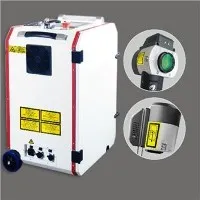
In recent years, laser cleaning has emerged as a promising technology in the semiconductor industry, revolutionizing the traditional cleaning methods. Laser cleaning offers numerous advantages over conventional cleaning techniques, including efficiency, precision, and non-contact characteristics.
One of the key applications of laser cleaning in the semiconductor field is the removal of contaminants from semiconductor wafers. During the manufacturing process, these wafers are exposed to various pollutants such as oxide layers, grease, and particulate matter. Traditional cleaning methods involve the use of solvents or chemicals, which may leave behind residue and potentially damage the delicate structures of the semiconductor. Laser cleaning, on the other hand, uses high-energy laser beams to effectively remove contaminants without causing any unwanted side effects.
In conclusion, laser cleaning has proven to be a valuable and versatile tool in the semiconductor industry. Its ability to efficiently and precisely remove contaminants from semiconductor surfaces, its capacity for selective material removal, and its suitability for repair and rework purposes make it an indispensable technology in the manufacturing of high-quality semiconductor components. As the semiconductor industry continues to advance, laser cleaning is expected to play an even more prominent role in ensuring the reliability and performance of semiconductor devices.